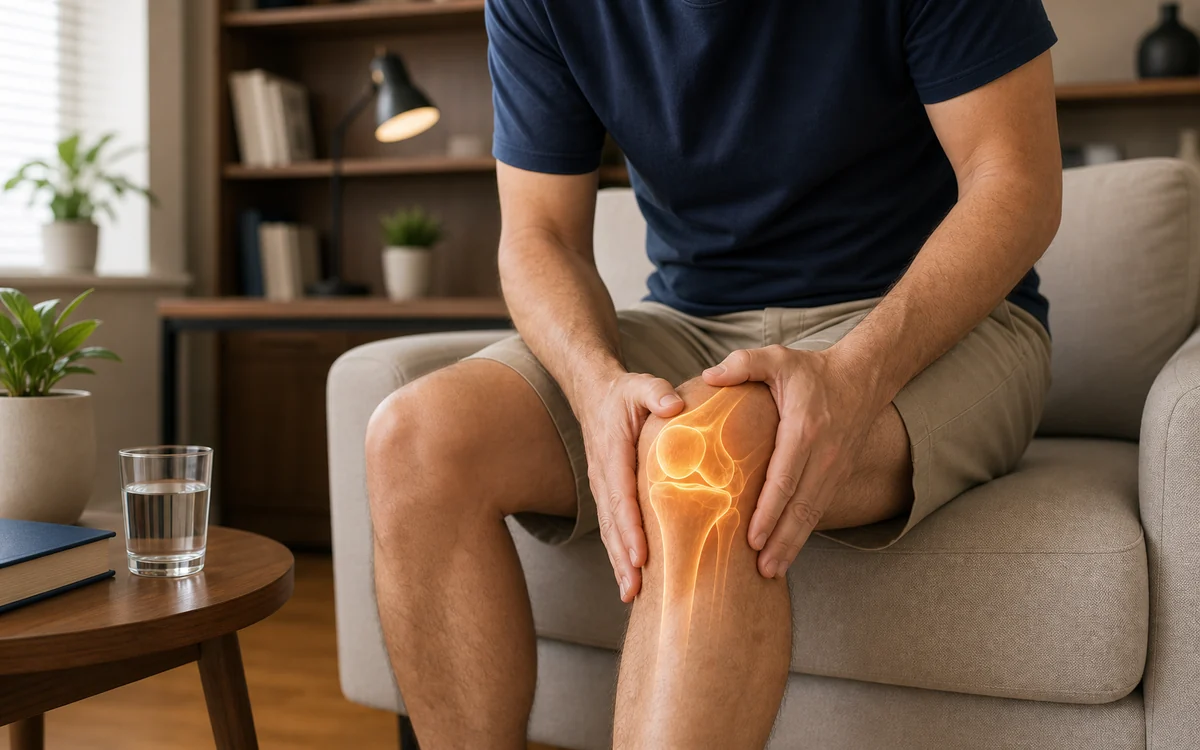
Can I claim for a knee injury after a slip or fall in NSW?
A slip or fall may raise a public liability enquiry for a knee injury, but the position depends on what caused the fall, who controlled the area, medical evidence, symptoms, work impact and dates.
Permanent impairment assessment
How permanent impairment is assessed for Knee joint, meniscus, cruciate/collateral ligaments, patella, cartilage and replacement issues
Knee WPI should identify the actual residual knee problem: meniscal tear or meniscectomy, ACL/PCL/MCL/LCL laxity, tibial plateau fracture, patello-femoral injury, patellar dislocation/translocation, chondral defect, cartilage loss/osteoarthritis, knee replacement, ROM loss, flexion contracture, extension lag or instability.
What injuries can happen to this body part?
- Meniscal tear, partial or total meniscectomy, locking or catching symptoms
- ACL, PCL, MCL or LCL tear, reconstruction, residual laxity or instability
- Tibial plateau fracture, chondral defect, cartilage loss or post-traumatic osteoarthritis
- Patello-femoral pain, patellar dislocation/translocation or isolated patello-femoral replacement
- Reduced flexion, flexion contracture, extension lag, instability, total knee replacement or hemiarthroplasty
Symptoms and findings that matter
- The precise diagnosis and whether the method is meniscus, ligament, fracture, arthritis, ROM or replacement scoring
- Knee flexion, extension, flexion contracture and extension lag where ROM/scoring applies
- Objective laxity rather than only giving-way symptoms
- Weight-bearing X-ray views where cartilage loss or osteoarthritis is alleged
- Whether patello-femoral findings can be used or are already part of the knee arthritis assessment
What investigations are usually relevant?
- Treating specialist report and final impairment assessment at maximum medical improvement
- Imaging, pathology, audiology, ophthalmology, respiratory, nerve or functional testing that fits the body system
- Operative reports, discharge summaries, rehabilitation records and objective clinical measurements where relevant
How WPI is assessed for this body part
- Knee WPI should identify the actual residual knee problem: meniscal tear or meniscectomy, ACL/PCL/MCL/LCL laxity, tibial plateau fracture, patello-femoral injury, patellar dislocation/translocation, chondral defect, cartilage loss/osteoarthritis, knee replacement, ROM loss, flexion contracture, extension lag or instability.
- Assessment source: NSW Guidelines Chapter 3 lower extremity, including NSW Table 3.2 for tibial plateau fracture, corrected Table 17-35 for knee replacement, patello-femoral rules, arthritis/cartilage rules and the NSW-added mild ligament laxity row.
- The assessor should explain maximum medical improvement, the body-system chapter, the method selected, any NSW modification, and why the objective findings fit that method.
How movement affects the assessment
- Flexion affects kneeling, squatting, stairs, low chairs and getting in or out of vehicles.
- Extension loss affects standing posture, stride and walking efficiency.
- Flexion contracture and extension lag are especially important after knee replacement because the corrected NSW table includes deductions.
NSW lower limb global rules
Most specific method firstUse the method that most specifically addresses the lower limb impairment where possible, rather than a broad fallback label.
Highest valid assessmentWhere more than one valid lower limb method applies, the NSW Guidelines generally require the assessment that gives the highest valid rating, unless a specific rule prevents it.
Do not exceed amputation valueA lower limb part or region cannot exceed the applicable amputation value. The whole lower limb maximum is 40% WPI, except where a specific gait table gives WPI directly.
Gait derangement is last resortGait derangement should be used only as a last resort and cannot be combined with other lower extremity assessment methods.
Permanent walking aid onlyIf a walking aid is relied on, the evidence should show permanent use, not a temporary aid during treatment or recovery.
ROM reliabilityROM can be unreliable where effort, pain behaviour or inconsistency affects measurement. The opposite side should be compared where relevant.
Arthritis needs imagingArthritis/cartilage loss must be radiologically assessed. Pain, crepitus or a broad MRI comment is not enough by itself.
Lower limb ROM and consistency rules
Use ROM only where validROM should be used only where the measurements are consistent and clinically reliable.
Same joint planesMultiple valid planes within the same lower limb joint are added, not combined, under the NSW lower limb method.
Opposite side comparisonIf the opposite side has reduced average mobility, the assessor should explain whether baseline deduction or comparison is needed.
Knee varus/valgus with arthritisVarus or valgus deformity due to compartment arthritis is not combined with ROM; both are calculated and the greater valid value is used.
Meniscus diagnosis-based examples where AMA5 is adopted
Partial medial or lateral meniscectomy1% WPI (2% lower extremity impairment) where the adopted AMA5 diagnosis-based estimate applies.
Total medial or lateral meniscectomy3% WPI (7% lower extremity impairment) where the adopted AMA5 diagnosis-based estimate applies.
Partial medial plus partial lateral meniscectomy4% WPI (10% lower extremity impairment) where the adopted AMA5 diagnosis-based estimate applies.
Total medial and lateral meniscectomy9% WPI (22% lower extremity impairment) where the adopted AMA5 diagnosis-based estimate applies.
Not scan-onlyA meniscal tear on MRI does not equal the meniscectomy row if no meniscectomy or qualifying residual condition is present.
NSW ligament laxity and knee instability rows
Mild cruciate or collateral ligament laxityNSW adds the omitted mild category: 5% WPI (12% lower extremity impairment), where clinical laxity criteria apply.
Reconstruction aloneACL/PCL/MCL/LCL reconstruction does not create WPI by itself; residual laxity and function at MMI matter.
Instability vs symptomsGiving way, fear of movement or pain should be separated from objective ligament laxity, meniscus locking and arthritis/cartilage loss.
NSW Table 3.2 tibial plateau fracture rows
Undisplaced tibial plateau fracture2% WPI (5% lower extremity impairment).
Mild tibial plateau fracture5% WPI (12% lower extremity impairment).
Moderate tibial plateau fracture10% WPI (25% lower extremity impairment).
Severe tibial plateau fracture15% WPI (37% lower extremity impairment).
Severity factorsThe grade depends on weight-bearing area involvement, displacement and comminution.
NSW patello-femoral rules
Isolated patello-femoral joint replacementAssess the knee in the usual way and combine with 9% WPI (22% lower extremity impairment) where the NSW criteria apply.
Direct front-of-knee injury or translocationPatello-femoral arthritis rows should be used only where the NSW history criteria are met.
Crepitus timingPatello-femoral crepitus needs to be present at least one year after injury before it is used in the limited NSW context.
No double countPatello-femoral osteoarthritis is not an additional impairment when arthritis of the knee joint itself is being assessed.
NSW arthritis and cartilage-loss rules
Cartilage loss definitionOsteoarthritis for lower limb WPI is assessed as cartilage loss, usually through radiologically determined joint-space intervals in AMA5 Table 17-31 as adopted by NSW.
Knee compartmentsThe knee has three compartments. The major impairment compartment is used; compartments are not added or combined.
Cannot combine with some methodsArthritis rating cannot be combined with gait disturbance, muscle atrophy, muscle strength or ROM.
Patello-femoral cautionPatello-femoral arthritis/crepitus is not added again when assessing arthritis of the knee joint itself.
Resurfacing proceduresNSW gives no additional impairment for resurfacing procedures for localised cartilage lesions or defects in major joints.
NSW corrected knee replacement scoring elements
Pain, ROM and stabilityThe corrected NSW Table 17-35 scores pain, ROM, anteroposterior stability and mediolateral stability before deductions.
ROM scoreAdd 1 point for each 5 degrees of knee motion, to a maximum of 25 points, under the corrected NSW table.
Flexion contracture deductionDeduct 2, 5, 10 or 20 points for flexion contracture from 5-9, 10-15, 16-20 or more than 20 degrees.
Extension lag deductionDeduct 5, 10 or 15 points for extension lag below 10, 10-20, or more than 20 degrees.
Alignment deductionAlignment deductions apply for varus or out-of-range valgus; constitutional variation should be checked against the unaffected limb.
Practical WPI examples
- An ACL reconstruction with no residual laxity may not create WPI through a ligament row.
- A tibial plateau fracture should be checked against NSW Table 3.2, because displacement, comminution and weight-bearing area matter.
- A knee with cartilage loss should not be rated by casually adding ROM, gait and arthritis together where NSW prohibits combination.
Evidence checklist
- A clear diagnosis and the body area being assessed
- Records showing the condition has reached maximum medical improvement, if that is the issue
- Specialist reports, imaging reports and treating notes relied on by the assessor
- Objective findings on examination, not only symptoms described by the injured person
- A work and treatment chronology explaining the injury, treatment, surgery and recovery path
- Any previous injury, degeneration, congenital issue or non-work cause that needs apportionment considered
- MRI and operative report
- Weight-bearing knee X-rays including compartment views where arthritis is alleged
- Stability testing
- ROM measurements
- Physiotherapy records
- Work-duty evidence about kneeling, stairs and standing
What usually does not increase WPI
- Assuming a scan result automatically gives a WPI percentage
- Confusing pain, disability or inability to work with permanent impairment
- Ignoring maximum medical improvement before arranging an assessment
- Using an AMA5 table without checking whether the NSW Guidelines modify or replace it
- Double counting the same impairment through two methods when the Guidelines require one method
- Counting the same knee problem under meniscus, arthritis, ROM and gait at once
- Treating patello-femoral crepitus as an automatic add-on
- Assuming reconstruction or arthroscopy alone decides WPI
Assessment source
Assessment source: Assessment source: NSW Guidelines Chapter 3 lower extremity, including NSW Table 3.2 for tibial plateau fracture, corrected Table 17-35 for knee replacement, patello-femoral rules, arthritis/cartilage rules and the NSW-added mild ligament laxity row.
This section is source-backed general information. It is not a WPI assessment and is not legal advice.
Related injury and claim pages
Need a practical claim check?
If an impairment percentage, medical assessment or insurer decision is affecting your NSW injury claim, send the decision or report for a practical review. This is general information only and does not guarantee any result.
Request a free claim checkCommon accident contexts
Knee injury evidence usually starts with the movement or impact: a fall, twist, vehicle accident, kneeling task, stairs, uneven surface or work activity. The pathway depends on where and why that happened.
- Slip, trip and fall or public place incidents involving impact, twisting or awkward landing
- Work injury claims involving kneeling, stairs, lifting, falls, machinery or repetitive duties
- Car accident and CTP matters where knee symptoms follow impact or bracing
- TPD enquiries where long-term knee restriction affects sustainable work
Symptoms and treatment records that may matter
Medical records may mention knee pain, swelling, instability, restricted walking, stairs difficulty, kneeling limits, treatment needs or mobility changes. Medical review is important because this page does not diagnose injury.
Evidence to keep
For knee injuries, keep treatment records, imaging referrals, mobility restrictions, incident photos or reports, footwear or surface details where relevant, and work-duty records.
- Medical certificates, treatment notes, imaging referrals and rehabilitation records
- Photos of the scene, hazard, vehicle damage, workplace area or injury where relevant
- Incident reports, witness names, CCTV request details or employer records
- Rosters, payslips, duties descriptions and return-to-work plans
Ask which claim pathway may applyHow the injury may affect assessment
Knee symptoms can affect walking, stairs, kneeling, driving, standing, manual work, home tasks and treatment attendance. Claim assessment often needs evidence of those practical limits.
Common claim problems
These issues do not decide the outcome by themselves, but they are common reasons a claim needs careful evidence and chronology.
- Disputes about how the knee injury happened
- Missing photos or CCTV after a fall
- Insurer questions about treatment or work capacity
- Suitable duties that still require standing, stairs or kneeling beyond restrictions
Mistakes to avoid
Knee claims can be weakened when mobility problems, swelling, instability or work restrictions are not recorded close to the event.
- Not reporting the incident or hazard early
- Waiting too long for medical review
- Discarding photos, CCTV request details or witness names
- Assuming a knee injury by itself determines the practical claim issue
Claim pathway
How injury evidence is usually organised
This is a general pathway only. The documents, decision-maker and timing can change depending on the facts and claim type.
- 1
Injury or incident
Start with where and how the injury happened: road accident, workplace incident, public or private place, or a longer-term disability situation.
- 2
Medical treatment
Get appropriate treatment and keep certificates, referrals, scans, reports and notes about how symptoms affect work or daily life.
- 3
Evidence and chronology
Organise incident records, photos, witness details, wage records, claim numbers and correspondence in date order.
- 4
Insurer or super fund
The pathway may involve a CTP insurer, workers compensation insurer, public liability insurer or superannuation trustee/insurer.
- 5
Assessment or dispute
The insurer or fund may request material, assess treatment or work capacity, make a decision, or issue reasons that need a careful response.
- 6
Resolution or next decision
The practical outcome may be approval, payment, treatment support, further evidence, review, dispute steps or another decision point.
Documents and records
Injury evidence to organise early
The useful records depend on how the injury happened, when symptoms were recorded and how treatment or work capacity changed.
- Date, location and short description of the injury event
- Medical certificates, reports, scans, treatment records or hospital documents
- Employer, insurer, police, incident or venue records where relevant
- Photos, witness details, dashcam or other supporting material if available
- Income, superannuation, work capacity or leave records where relevant
- Letters, emails, claim numbers and decisions already received
Common questions
Injury evidence questions
Short general answers only. The right next step depends on the facts, dates and documents.
Can I claim for a knee injury after a slip or fall in NSW?
A slip or fall may raise a public liability enquiry for a knee injury, but the position depends on what caused the fall, who controlled the area, medical evidence, symptoms, work impact and dates.
What evidence helps after a knee injury in a public place?
Photos, incident reports, witness names, CCTV request details, medical records, expenses and income records may help. The facts and documents determine the practical pathway.
Which claim type might apply?
That depends on how the injury happened. The same injury can involve CTP, workers compensation, public liability, TPD or more than one pathway. Get advice if the pathway is unclear.